The Ivanpah concentrated-solar project has been an environmental and economic disaster.
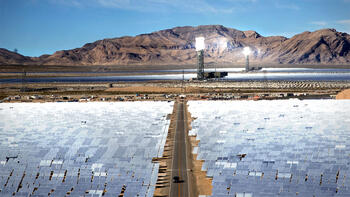
Launched in 2014, the $2.2 billion solar facility located 230 miles northeast of Los Angeles, was designed to produce 392 megawatts of electricity by focusing sunlight on 459-foot-high towers. At the ribbon-cutting ceremony, then-Secretary of Energy Ernie Moniz claimed the sprawling project, which covers nearly six square miles of the Mojave Desert, was a “shining example” of America’s leadership in solar energy.
But Ivanpah was a flop. It never generated more than 75% of its planned electricity output. It relies heavily on natural gas to ensure its complex generators operate properly. The juice it produces is absurdly expensive. And it has been a disaster for wildlife. Some 6,000 birds are being killed every year while flying between the mirrors and the towers. The project also required relocating endangered desert tortoises. Even the goofballs at the Sierra Club, an outfit that has never met a solar, wind, or battery project it couldn’t slobber over, have called Ivanpah a “financial boondoggle and environmental disaster.”
In January, Pacific Gas & Electric, California’s largest utility, announced it was terminating power purchase agreements it signed 15 years ago and the plant, which is operated, and partially owned by Houston-based NRG, would be shuttered and dismantled. Those contracts were expected to run through 2039. Ending the contracts, PG&E said, “will save customers money.” But last week, the California Public Utility Commission rejected the proposed shutdown and ordered the plant to stay open. Why? Shelving the project would threaten the state’s efforts to achieve its renewable energy targets. The agency also said that the transmission and distribution infrastructure that ratepayers have already paid for would be “stranded.”
What a load of crap. As one insider told me, the California Independent System Operator recently issued a forecast which showed the state will have to rely even more on imported electricity in the coming years. With the state’s goal of achieving 100% zero-carbon electricity by 2045 in jeopardy, this insider told me, the state “can’t afford to let go of any renewables no matter how uneconomic...Important to keep up appearances no matter what it costs.”
Read the rest of this piece at: Robert Bryce Substack.
Robert Bryce is a Texas-based author, journalist, film producer, and podcaster. His articles have appeared in a myriad of publications including the Wall Street Journal, New York Times, Forbes, Time, Austin Chronicle, and Sydney Morning Herald.
Photo:California Energy Commission, via Flickr under CC 2.0 License.
 Email this Story